Political Career
Three Decades of Distinguished Public Service
Career Overview
Jishnu Dev Varma's political journey spans over three decades, encompassing roles that range from grassroots party organisation to the highest constitutional offices in India. His entry into active politics came during the early 1990s, when the Ram Janmabhoomi movement was reshaping India's political landscape. Drawn to the Bharatiya Janata Party's ideology of cultural nationalism and good governance, he quickly emerged as a significant figure in the party's northeastern operations.
His rise within the BJP was swift and substantive. By 1993, he had been appointed National General Secretary — a testament to both his organisational acumen and the trust reposed in him by the party's central leadership. His three successive Lok Sabha campaigns from Tripura East (1996, 1998, 1999), though unsuccessful in securing parliamentary representation, established him as the BJP's most visible face in a region long dominated by the Left Front and the Indian National Congress.
The watershed moment came in 2018, when the BJP swept to power in Tripura for the first time in history. Jishnu Dev Varma won the Charilam constituency with an extraordinary margin of over 25,000 votes — capturing 89% of valid ballots — and was appointed Deputy Chief Minister under Biplab Kumar Deb. This was more than a personal victory; it represented the culmination of decades of patient political work in one of India's most electorally challenging states.
What distinguishes Jishnu Dev Varma's political career is not merely the offices he has held, but the consistency of his commitment. In a political environment where party-switching and opportunistic alliances are commonplace, he remained with the BJP through its leanest years in the Northeast — when the party had virtually no electoral footprint in the region. His loyalty was not born of political calculation but of genuine ideological conviction, earning him the respect of both the central leadership and the party's grassroots cadre.
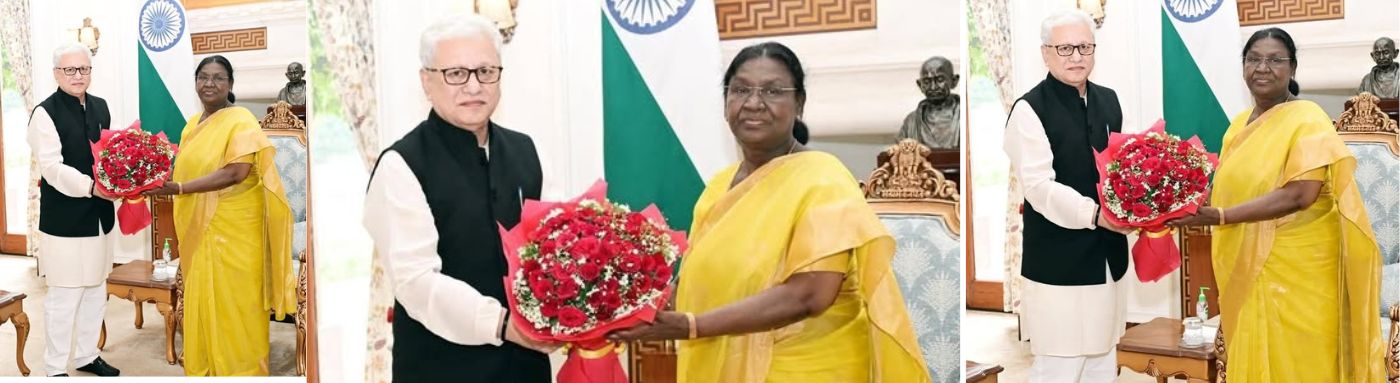
His subsequent appointments as Governor of Telangana (2024) and Governor of Maharashtra (2026) represent the recognition of this decades-long dedication. These constitutional positions allowed him to bring his administrative experience, developmental vision, and deep understanding of India's federal structure to two of the nation's most significant states — first Telangana, with its technology-driven economy, and then Maharashtra, India's industrial powerhouse.
Building the BJP in Northeast India
When Jishnu Dev Varma joined the Bharatiya Janata Party in the early 1990s, the party's presence in India's northeastern states was negligible. The region had been a stronghold of the Communist Party of India (Marxist) and the Indian National Congress for decades. Tripura, in particular, had been governed by the Left Front almost continuously since 1978, and the BJP was widely regarded as a party with no viable future east of Bengal.
Against this backdrop, Jishnu Dev Varma's decision to align with the BJP was as much an act of conviction as it was of political courage. His royal lineage and social standing gave him a platform that few other BJP leaders in the region possessed, and he used it to methodically build the party's organisational infrastructure across Tripura. From village-level booth committees to district-level coordination, he helped construct the scaffolding upon which the party's future success would be built.
His appointment as National General Secretary in 1993 was recognition of this pioneering work. In that role, he served as a bridge between the party's powerful central leadership and its nascent northeastern operations, advocating for greater attention to the region's unique developmental challenges and political dynamics. He also served on the North-Eastern Council Advisory Committee from 1989 to 1993, gaining invaluable insights into the policy frameworks governing the region.
The three Lok Sabha campaigns from Tripura East (1996, 1998, 1999) were part of this long-term strategy. While they did not yield electoral victories, they served a critical purpose: establishing the BJP as a credible political alternative in a constituency reserved for Scheduled Tribe candidates, demonstrating the party's commitment to tribal empowerment, and building name recognition that would pay dividends two decades later. Each campaign expanded the party's support base, recruited new workers, and challenged the Left Front's monopoly on political discourse in the state.

Key Milestones in NE Expansion
- 1989-93North-Eastern Council Advisory Committee member
- 1993National General Secretary — advocated NE policy focus
- 1996-99Three Lok Sabha campaigns from Tripura East
- 2000sGrassroots party building across Tripura districts
- 2018BJP wins Tripura for the first time in history
Constitutional & Political Offices Held
March 2026 -- Present
22nd Governor of Maharashtra
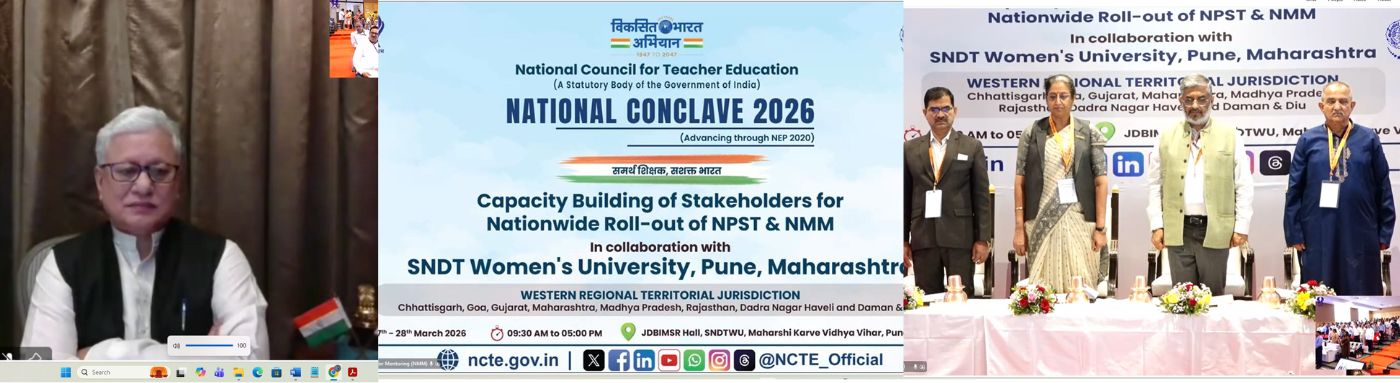
Serving as the Chancellor of State Public Universities and constitutional head of India's most industrialised state. In his first formal interactions, he directed all State Public Universities to submit quarterly reports to Raj Bhavan, emphasising institutional excellence and transparency in higher education. He is the first resident of Tripura to hold this prestigious constitutional post.
July 2024 -- March 2026
Governor of Telangana
Articulated the ambitious "Telangana Rising 2047" vision — a comprehensive roadmap for inclusive and sustainable development positioning Telangana as a key driver of India's progress by the centenary of independence. Proposed the creation of three economic zones (CURE, PURE, RARE) and the visionary Bharat Future City concept.
2018 -- 2023
Deputy Chief Minister of Tripura
Held portfolios of Finance, Power, Rural Development and Panchayat, Planning and Coordination, TREDA, and Science, Technology and Environment under Chief Ministers Biplab Kumar Deb and Manik Saha. Oversaw World Bank-funded tribal development, solar electrification of 500 villages, and presented the landmark tax-free budget of FY 2022-23.
2018 -- 2023
MLA, Charilam Constituency
Won the Charilam seat in Sepahijala district with an extraordinary margin of over 25,000 votes — capturing 89% of valid ballots — defeating Congress candidate Arjun Debbarman as the BJP swept to power in Tripura for the first time in history.
1993
National General Secretary, BJP
One of the youngest leaders to hold this national position within the Bharatiya Janata Party during a formative period of its growth. His appointment reflected both his organisational acumen and the trust reposed in him by the party's central leadership.
1996, 1998, 1999
Lok Sabha Candidate, Tripura East
Three successive parliamentary campaigns from the Tripura East constituency. Though unsuccessful in securing representation, these contests established the BJP's most visible face in a region long dominated by the Left Front and the Indian National Congress, laying the groundwork for the party's eventual 2018 breakthrough.
Ministerial Portfolios as Deputy Chief Minister
Finance
Presented annual state budgets including the landmark Rs. 26,893 crore tax-free budget for FY 2022-23, prioritising development expenditure without imposing new taxes on the people of Tripura.
Power
Oversaw the state's energy infrastructure and electricity distribution, working to bring reliable power to remote and underserved communities across the state.
Rural Development & Panchayat
Drove modernisation of rural areas and strengthened local governance institutions, ensuring decentralised planning reached every village and tribal council.
Planning & Coordination
Provided strategic oversight of state development planning, coordinating across departments to align priorities with sustainable growth objectives.
TREDA
Led the Tripura Renewable Energy Development Agency to make Tripura the top state in solar energy adoption among all North Eastern states of India.
Science, Technology & Environment
Championed sustainable development and green technology adoption, including the pioneering Bio Village 2.0 initiative recognised internationally.
Deputy Chief Minister Tenure: 2018–2023
The five-year tenure as Deputy Chief Minister of Tripura was the most consequential administrative period of Jishnu Dev Varma's career. Serving first under Chief Minister Biplab Kumar Deb (2018-2022) and subsequently under Chief Minister Manik Saha (2022-2023), he held an unusually broad portfolio that gave him influence over nearly every major dimension of state governance — from fiscal policy and energy infrastructure to rural development and scientific research.
As Finance Minister, he was responsible for the state's annual budgets at a time when Tripura was undergoing rapid economic transformation following the change in government. His budgets were characterised by a distinctive philosophy: maximising development expenditure while imposing no new taxes on the citizenry. The landmark Rs. 26,893 crore budget for FY 2022-23 exemplified this approach, with dedicated allocations for power sector modernisation, rural infrastructure, and tribal welfare programmes.
His tenure saw several landmark achievements: securing Rs. 1,400 crore in World Bank financing for tribal development — a first for any northeastern state; electrifying 500 remote tribal villages through solar micro-grids funded by a Rs. 80 crore central government grant sanctioned by Prime Minister Modi; and establishing Tripura as the leading state in solar energy adoption across the entire northeast region. The Bio Village 2.0 programme, which he championed, was recognised internationally as one of the best practices in sustainable rural development.
Perhaps most significantly, his tenure demonstrated that sustainable development and fiscal prudence could coexist. While many state governments rely on increased taxation to fund development, Dev Varma showed that strategic planning, efficient resource allocation, and innovative partnerships — including the unprecedented World Bank collaboration — could deliver transformative outcomes without burdening taxpayers.
5
Years as Deputy CM
6
Portfolios Held
₹26,893 Cr
Largest Budget Presented
₹1,400 Cr
World Bank Funding
The 2018 Charilam Victory
The Charilam constituency in Sepahijala district became the stage for one of the most remarkable electoral performances in Tripura's history. In the 2018 state elections, Jishnu Dev Varma captured the seat with a staggering 89% of all valid votes cast, defeating the Congress candidate Arjun Debbarman by a margin of over 25,000 votes. This was not merely a personal triumph — it was one of the largest margins of victory in Tripura's electoral history and a powerful symbol of the seismic political shift sweeping the state.
The victory was all the more remarkable given the constituency's demographics and political history. Charilam had been a bastion of the Left Front for decades, and the scale of the BJP's victory here — mirrored across the state — signalled a fundamental realignment of Tripura's political landscape. For Dev Varma personally, it was the vindication of over two decades of patient political work, beginning with those early Lok Sabha campaigns in the 1990s when the BJP was an electoral afterthought in the Northeast.
His appointment as Deputy Chief Minister following the victory was a natural recognition of his seniority, electoral performance, and the breadth of administrative capability he had demonstrated over his career. The decision also reflected the party's recognition that governing Tripura would require leaders who combined political acumen with genuine understanding of the state's unique developmental challenges — a combination that Dev Varma, with his royal heritage, grassroots experience, and intellectual depth, uniquely possessed.
89%
Vote Share
25,000+
Victory Margin
1st
BJP Govt in Tripura
Electoral Record
| Year | Constituency | Election | Result | Margin |
|---|---|---|---|---|
| 1996 | Tripura East | Lok Sabha | Did Not Win | -- |
| 1998 | Tripura East | Lok Sabha | Did Not Win | -- |
| 1999 | Tripura East | Lok Sabha | Did Not Win | -- |
| 2018 | Charilam | Tripura Assembly | Won | 25,000+ votes (89%) |
| 2023 | Charilam | Tripura Assembly | Did Not Win | -- |
The 2018 victory in Charilam was one of the largest margins of victory in Tripura's electoral history.
Journey with the BJP
Described as “the royal in the BJP camp — a loyalist through its good times and bad,” Jishnu Dev Varma's commitment to the party has remained unwavering across three decades. From the challenging early years of BJP's presence in the Northeast to the historic 2018 victory, his perseverance exemplified the kind of grassroots political dedication that is increasingly rare in Indian politics.
His entry into the BJP during the Ram Janmabhoomi movement in the early 1990s was driven by genuine ideological alignment rather than political convenience. At a time when joining the BJP in Tripura offered no obvious path to power, he chose the party because of its commitment to cultural nationalism, good governance, and the preservation of India's civilisational heritage — values that resonated deeply with his own royal background and understanding of Indian history.
His rapid elevation to National General Secretary in 1993 reflected the central leadership's recognition that the party's future growth depended on leaders who could build bridges between Hindu nationalism's mainstream appeal and the complex ethnic and tribal politics of the Northeast. Dev Varma, with his royal credentials, intellectual sophistication, and genuine understanding of northeastern society, was uniquely positioned for this role.
Through election victories and defeats alike, his loyalty never wavered. When the BJP lost the 2023 Tripura elections in many constituencies — including Dev Varma's own Charilam seat, lost to the Tipra Motha Party — he accepted the verdict with characteristic grace, demonstrating that his commitment to democratic principles was as deep as his commitment to the party. His subsequent gubernatorial appointments are widely viewed as the party's acknowledgement of this extraordinary decades-long service.
Public service is not a career choice — it is a calling. The privilege of serving one's people carries with it a responsibility that transcends electoral cycles, party politics, and personal ambition. It demands consistency, humility, and an unwavering commitment to the common good.
— Jishnu Dev Varma