Biography
The Life and Journey of Jishnu Dev Varma
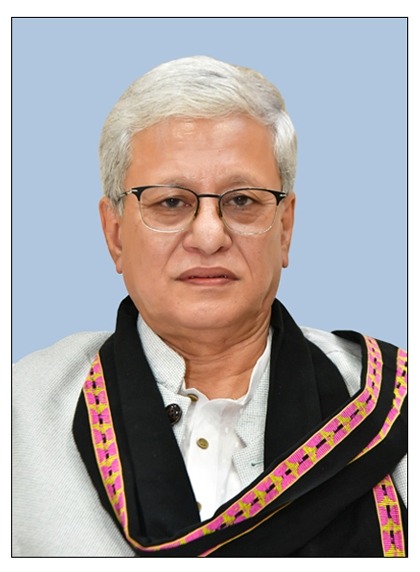
Shri Jishnu Dev Varma
22nd Governor of Maharashtra
Early Life & Heritage
Born on the fifteenth of August, 1957 — India's Independence Day — in the royal city of Agartala, Tripura, Jishnu Dev Varma entered the world bearing the dual inheritance of a newly independent nation and one of its most ancient ruling dynasties. As the son of Maharajkumari Kamal Prava Devi, the youngest daughter of Maharaja Birendra Kishore Manikya, and Ramendra Kishore Debbarman, who served as military secretary and home secretary to the last ruling monarch of Tripura, young Jishnu was raised at the intersection of royal tradition and modern democratic ideals.
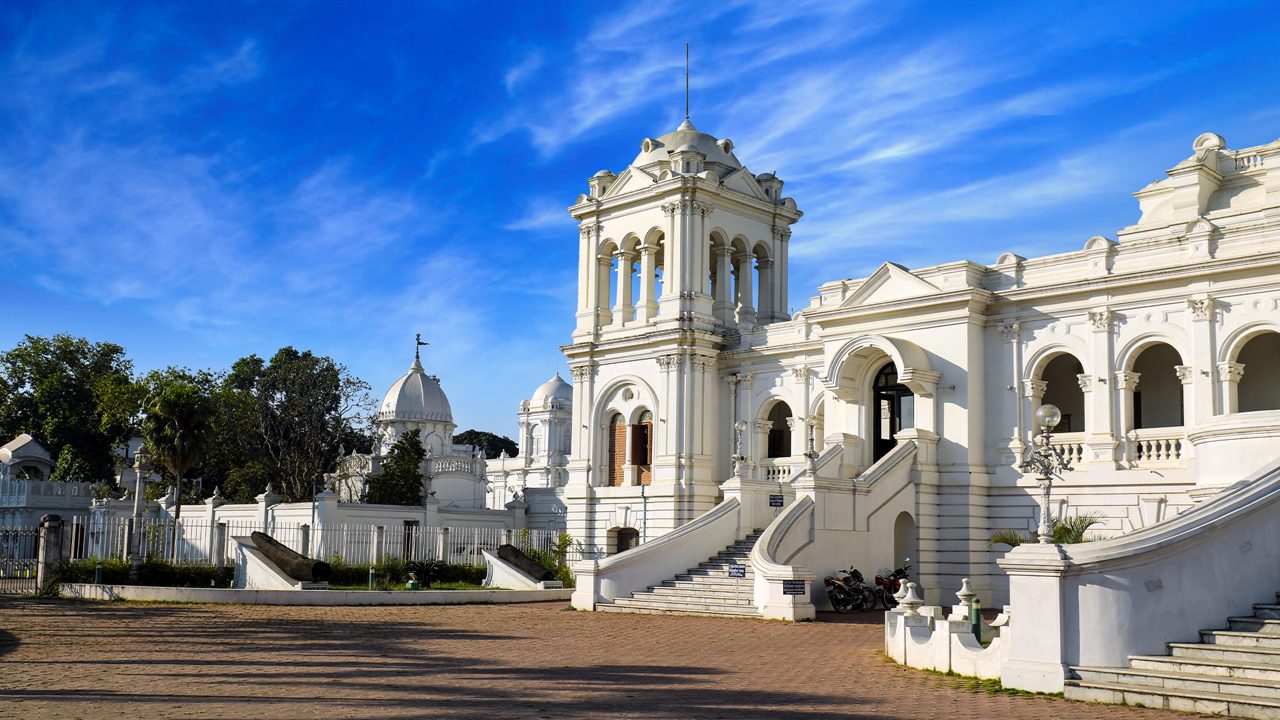
His early years were spent in Agartala, surrounded by the architectural splendour of the Ujjayanta Palace and the living memory of a kingdom that had governed Tripura for over fourteen centuries. The Manikya Dynasty, to which he belongs, is one of India's earliest recorded royal lineages — a dynasty renowned not merely for its longevity but for its progressive governance, including the introduction of Tripura's first written constitution in 1941.
This upbringing, steeped in both privilege and responsibility, would shape the trajectory of his entire life — from the boarding schools of Darjeeling to the corridors of state power, from the artist's studio to the Governor's residence.
Education
School Education
St. Joseph's School, North Point, Darjeeling
Set amidst the Himalayan foothills, St. Joseph's School provided a rigorous education rooted in discipline, academic excellence, and character formation. The boarding school experience, far from the royal household of Agartala, instilled in young Jishnu a spirit of independence and self-reliance.
Higher Education
Maharaja Bir Bikram College, Agartala
Returning to his home city for higher education, he pursued a Bachelor of Arts with Honours in English Literature at Maharaja Bir Bikram College, affiliated with the University of Calcutta. Named after his maternal uncle — Tripura's last ruling monarch — the college held both academic and deeply personal significance. His literary studies here would later manifest in his extensive body of published work.
Family & Personal Life
Jishnu Dev Varma is married to Sudha Dev Varma, who has been his steadfast partner throughout decades of political and public life. During his tenure as Governor of Telangana, she was referred to as the First Lady of Telangana — a role she carried with the same grace and quiet dignity that has characterised her support through every chapter of his career. Together, they have two sons: Pratik Kishore Dev Varma and Jaibant Dev Varma, who carry forward the family's traditions of service and cultural engagement.
Beyond the arenas of politics and governance, Jishnu Dev Varma is a man of remarkably diverse creative passions. He is a keen connoisseur and practitioner of modern art, painting, and sculpture. His artistic works — created often in collaboration with Sanskar Bharati — grace temples, tourist spots, and public spaces across Tripura, lending visual expression to the cultural heritage he has spent a lifetime preserving. His creative vision blends traditional Indian aesthetics with contemporary artistic sensibilities, resulting in works that are both rooted and forward-looking.
He is also a published poet of repute, with works in both Bengali and English that are celebrated for their evocative imagery and lyrical quality. His poetry explores themes of heritage, identity, nature, and the human condition — drawing from classical Indian literary traditions as well as modernist sensibilities. With six published books to his name, including titles such as Master of Time: Journey Through an Ancient Kingdom, The Children of Water Goddess, and Indigenous Wisdom — Man and Nature, his literary output reflects an intellectual depth that complements and enriches his life in public service.
The Artistic Journey
Jishnu Dev Varma's engagement with the visual arts is not a hobby undertaken alongside a political career — it is a parallel vocation pursued with the same seriousness and dedication that characterises his public service. His paintings, often exploring contemporary Indian themes through the lens of traditional aesthetics, reflect a visual sensibility shaped by both his Manikya heritage and his exposure to modern artistic movements during his education and travels.
His sculptural work is perhaps the most publicly visible expression of his artistry. Installations created in collaboration with Sanskar Bharati — the national cultural organisation dedicated to Indian artistic traditions — can be found at temples, tourist destinations, and civic spaces across Tripura. These works are deliberately placed in public environments rather than galleries, reflecting Dev Varma's conviction that art should be woven into the fabric of daily life rather than sequestered behind museum walls.
The philosophical underpinning of his art connects directly to the Manikya Dynasty's tradition of cultural patronage. Just as the Manikya kings commissioned temple architecture, sponsored court poets, and patronised musicians, Dev Varma creates art that serves a public function — enriching communal spaces, preserving cultural memory, and creating points of beauty and contemplation in the midst of everyday life. This continuity between royal patronage and personal artistic practice represents one of the most distinctive aspects of his multifaceted identity.
Philosophy & Values
At the core of Jishnu Dev Varma's public life lies a set of values that have remained remarkably consistent across five decades: the conviction that privilege entails responsibility; that governance must serve the most marginalised; that cultural heritage is not a relic of the past but a living resource for the future; and that sustainable development requires the integration of indigenous wisdom with modern knowledge.
These values are rooted in his upbringing within the Manikya tradition, which emphasised the monarch's duty to the people above all other considerations. The 1941 constitution promulgated by his uncle, Maharaja Bir Bikram Kishore Manikya, enshrined these ideals in written form — self-help, cooperation, and devotion to the state. For Dev Varma, the transition from monarchy to democracy did not alter these fundamental obligations; it merely changed the form through which they were discharged.
His intellectual interests — literature, ecology, art, governance — are not separate pursuits but facets of a single integrated worldview. His books on indigenous wisdom inform his development policies. His artistic practice connects to his heritage preservation work with INTACH. His poetry gives voice to the same values that drive his governance. This integration of creative, intellectual, and administrative life is perhaps the most distinctive and admirable quality of his public persona.
My royal heritage is not one of privilege but of responsibility — a duty to serve, protect, and uplift. The form has changed from monarchy to democracy, but the obligation remains the same.
— Jishnu Dev Varma
A Life in Public Service
Born in Agartala
Born on August 15, India's Independence Day, into the Manikya royal family of Tripura — the son of Maharajkumari Kamal Prava Devi and Ramendra Kishore Debbarman.
Educated at St. Joseph's, Darjeeling
Attended the prestigious St. Joseph's School, North Point, Darjeeling — one of India's oldest boarding schools, set amidst the Himalayan foothills.
B.A. Honours in English from MBB College
Graduated with a Bachelor of Arts (Honours) in English Literature from Maharaja Bir Bikram College, affiliated with the University of Calcutta.
Joins BJP During Ram Janmabhoomi Movement
Drawn to the Bharatiya Janata Party's ideology of cultural nationalism, he entered active politics during a transformative period in Indian political history.
Appointed National General Secretary of BJP
Rose to one of the party's highest organisational positions, reflecting the trust placed in him by the central leadership.
First Lok Sabha Contest from Tripura East
Contested the general election from the Tripura East parliamentary constituency, establishing the BJP's presence in a Left-dominated region.
Second Lok Sabha Contest
Returned to contest Tripura East again, continuing to build the party's grassroots network across the northeastern frontier.
Third Lok Sabha Contest
Made a third successive bid for Parliament from Tripura East, deepening the BJP's organisational footprint in the state.
INTACH Convener & Cultural Preservation
Served as Convener of the Indian National Trust for Art and Cultural Heritage (INTACH) Tripura Chapter, coordinating heritage preservation across the Northeast.
Elected MLA from Charilam
Won the Charilam constituency with a historic margin of over 25,000 votes — capturing 89% of valid ballots — as the BJP swept to power in Tripura for the first time.
Sworn in as Deputy Chief Minister of Tripura
Appointed Deputy Chief Minister under Biplab Kumar Deb, holding portfolios of Finance, Power, Rural Development, Planning, TREDA, and Science & Technology.
Publishes "Indigenous Wisdom" and "MBB College: A Dream College"
Released two books reflecting his commitment to preserving indigenous knowledge and honouring the educational legacy of his maternal uncle's institution.
Completes Deputy Chief Minister Tenure
Concluded five years as Deputy CM after overseeing transformative development initiatives including World Bank-funded tribal projects and solar electrification.
Appointed Governor of Telangana
Took office as Governor of Telangana in July 2024, where he articulated the ambitious "Telangana Rising 2047" vision for inclusive development.
Appointed 22nd Governor of Maharashtra
Sworn in as the 22nd Governor of Maharashtra on March 10, 2026 — the first resident of Tripura to hold this distinguished constitutional post.
A life devoted to public service is not a sacrifice — it is a privilege. Each day offers an opportunity to contribute to the betterment of our people and the preservation of our shared heritage.
— Jishnu Dev Varma